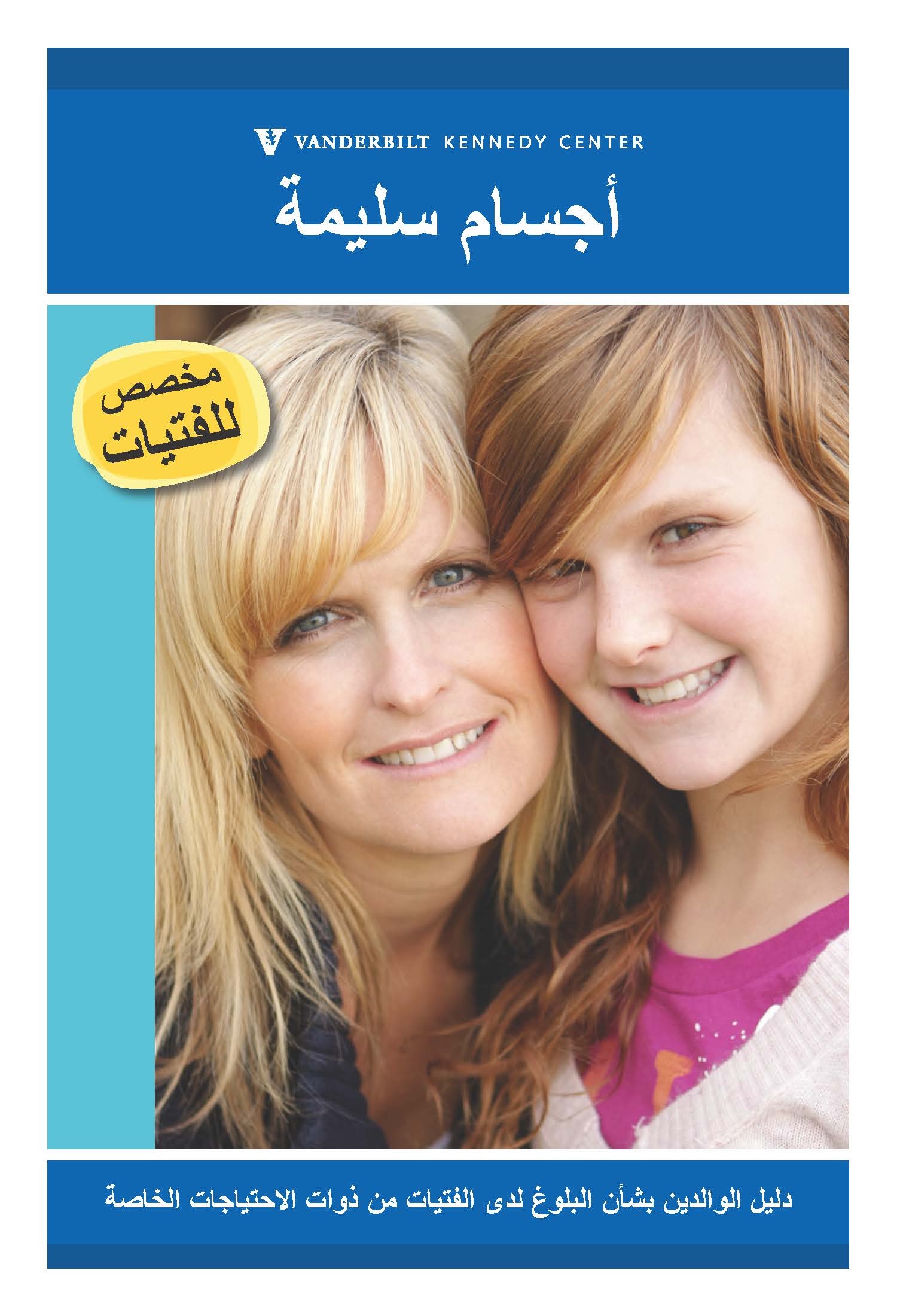
دليل الأجسام الصحيّة

البلوغ عند ذوي الاحتياجات الخاصة

Healthy Bodies Toolkit (Vanderbilt Kennedy Center)


We are grateful to the Vanderbilt Kennedy Center for making this valuable resource available to families and professionals.

مقدمة تعريفية بالمورد

يسرّنا عبر موقع MeAndMyChild.net تقديم مورد صحي وتربوي موثوق مقدم من Vanderbilt Kennedy Center، وهو:

Healthy Bodies Toolkit

دليل شامل لدعم الأطفال والمراهقين، بما في ذلك الأطفال ذوي اضطراب طيف التوحد، في المهارات الحياتية والصحة الجسدية، وقد تم تطويره من قبل فريق متخصص من الخبراء والباحثين.

يُعرض هذا الدليل على موقعنا بموافقة رسمية ومباشرة من Vanderbilt Kennedy Center بهدف دعم الأسر والكوادر التعليمية والصحية

مورد صحي معتمد من Vanderbilt Kennedy Center

دليل الأجسام الصحيّة – Healthy Bodies Toolkit

أداة عملية لدعم الأطفال والمراهقين، بما في ذلك الأطفال ذوي اضطراب طيف التوحد، في مهارات العناية بالجسد والصحة اليومية.

متاح على موقع MeAndMyChild.net بإذن رسمي من Vanderbilt Kennedy Center، لأغراض تعليمية غير ربحية.
جميع النصوص والرسوم محفوظة الحقوق لصالح Vanderbilt Kennedy Center، وتُستخدم على هذا الموقع بإذن خطّي مسبق.

تحميل المُلحقات الخاصة بمرحلة البلوغ

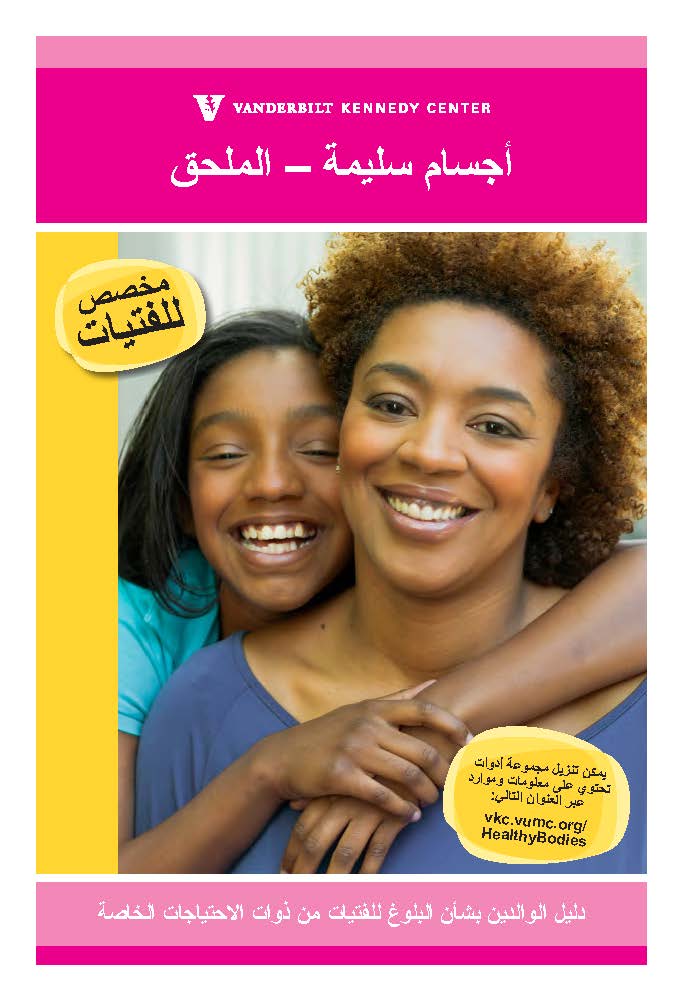
ملحق دليل الوالدين – البلوغ للفتيات من ذوي الاحتياجات الخاصة
ملحق دليل الوالدين – البلوغ فتيات ذوي احتياجات خاصة
فتح / تحميل الملف
مصدر الملف: Vanderbilt Kennedy Center
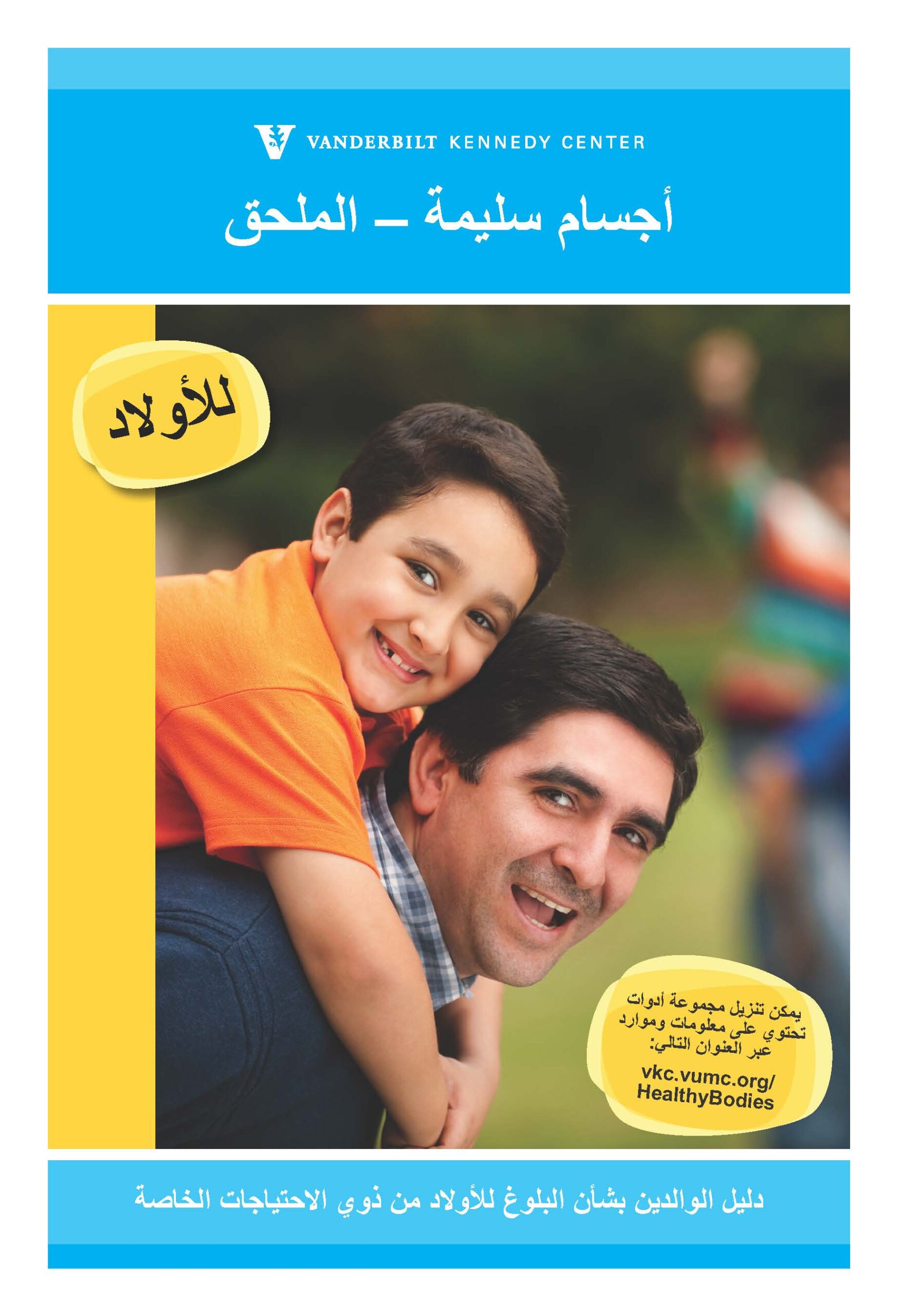
ملحق دليل الوالدين – البلوغ للأولاد من ذوي الاحتياجات الخاصة
ملحق دليل الوالدين – البلوغ فتيان ذوي احتياجات خاصة
فتح / تحميل الملف
مصدر الملف: Vanderbilt Kennedy Center
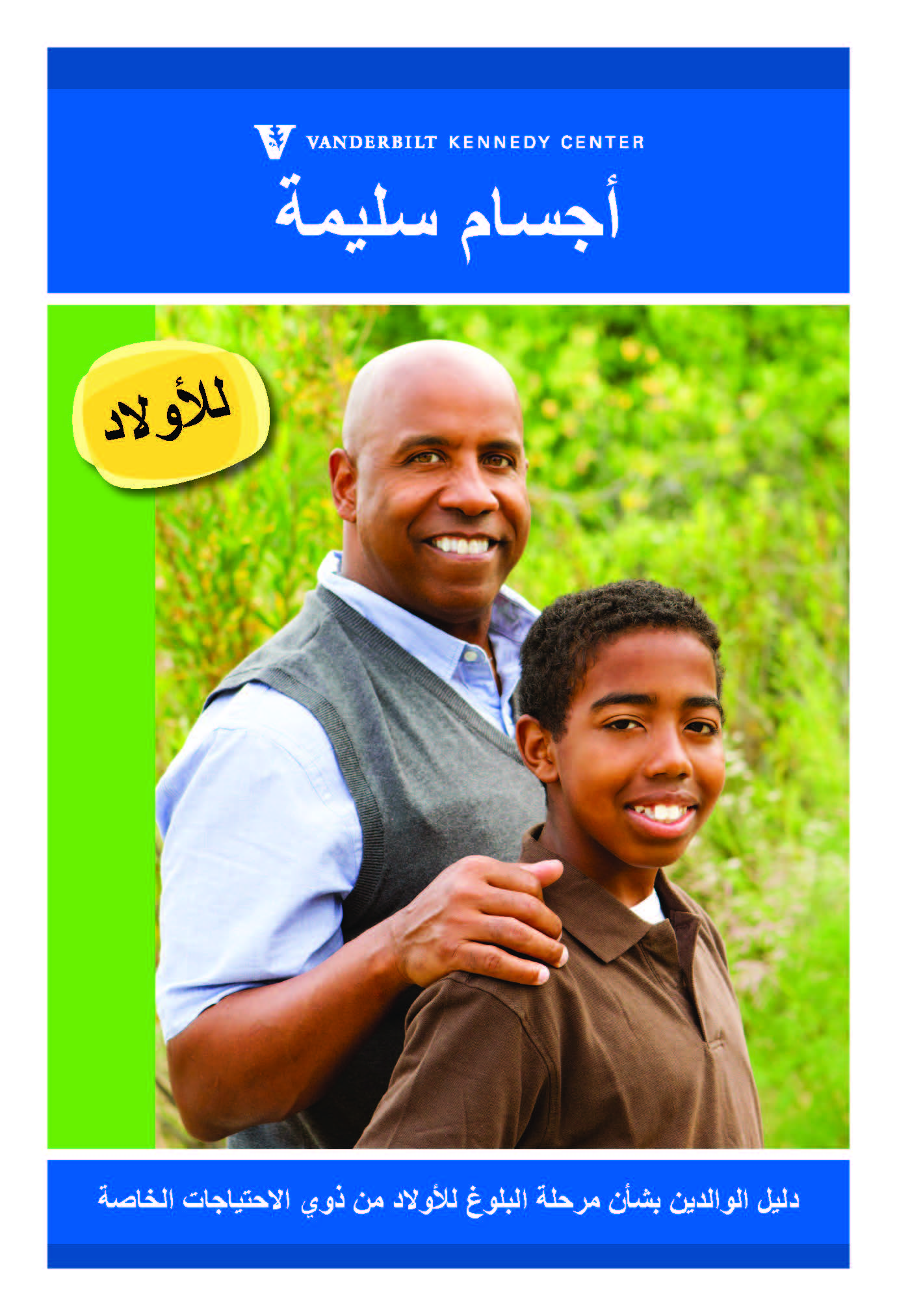
دليل الوالدين – مرحلة البلوغ لدى الفتيان من ذوي الاحتياجات الخاصة
دليل الوالدين – الفتيان (ذوي الاحتياجات الخاصة)
فتح / تحميل الملف
مصدر الملف: Vanderbilt Kennedy Center
دليل الوالدين – مرحلة البلوغ لدى الفتيات من ذوات الاحتياجات الخاصة
دليل الوالدين – الفتيات (ذوات الاحتياجات الخاصة)
فتح / تحميل الملف
مصدر الملف: Vanderbilt Kennedy Center

ما هو Healthy Bodies Toolkit؟

دليل “Healthy Bodies” هو مورد إرشادي تم تطويره في مركز فاندربيلت كينيدي لدعم الأطفال والمراهقين في فهم أجسادهم، والعناية بالنظافة الشخصية، والمهارات الحياتية المرتبطة بالنمو والصحة.

الفئة المستهدفة

  • الأطفال والمراهقون، بما في ذلك الأفراد ذوو اضطراب طيف التوحد.
  • الأهل ومقدمو الرعاية.
  • المعلّمون والاختصاصيون في التربية الخاصة.
  • الأخصائيون النفسيون والسلوكيون.

كيفية استخدام الدليل

  • كمرجع تثقيفي للأهل لمناقشة موضوعات الصحة والنظافة مع أبنائهم.
  • كمادة داعمة في الجلسات التعليمية أو العلاجية في المدارس والمراكز.
  • كأداة مساندة لتطوير برامج مهارات الحياة والاستقلالية.

روابط رسمية من Vanderbilt Kennedy Center

للاطلاع على النسخ الأحدث، واللغات الأخرى، والملحقات المرتبطة بالدليل:

للوصول إلى الملحقات، الترجمات، والتحديثات المستقبلية؛ يُنصح دائمًا بزيارة الموقع الرسمي مباشرة.

تجد الترجمة إلى لغات كثيرة في الموقع المصدر 

(https://vkc.vumc.org/healthybodies/

The homepage to the Vanderbilt Kennedy Center is

 https://vkc.vumc.org.

Healthy Bodies Toolkit Credits

This publication was developed and written by Vanderbilt Leadership Education in Neurodevelopmental Disabilities (LEND) long-term trainees Amy Weitlauf, PhD; Stormi White, PsyD; Olivia Yancey, MDE; Caitlin Nicholl Rissler, MSN; Doctor of Audiology student, Elizabeth Harland; Cong Van Tran, PhD; and LEND faculty members Jennifer Bowers, RN, MSN, CPNP, Pediatric Nurse Practitioner, Division of Developmental Medicine; and Cassandra Newsom, PsyD, Assistant Professor of Pediatrics, Division of Developmental Medicine, Director of Psychological Education, Treatment and Research Institute for Autism Spectrum Disorders (TRIAD)/Vanderbilt Kennedy Center. It was edited, designed, and produced by the Communications and Graphics staff of the Vanderbilt Kennedy Center for Excellence in Developmental Disabilities (Kylie Beck, BA; Jan Rosemergy, PhD; Courtney Taylor, MDiv) with the support of the Vanderbilt LEND (Pam Grau, BS; Evon Lee, PhD; Terri Urbano, RN, MPH, PhD). We are grateful for review and suggestions by many, including faculty of TRIAD and members of Autism Tennessee.

All text and illustrations are copyrighted by the Vanderbilt Kennedy Center and cannot be used in another context without written permission of Vanderbilt Kennedy Center Communications (kc@vumc.org, 615-322-8240).

This publication was made possible by Grant No. T73MC30767 from the Maternal and Child Health Bureau (MCHB), Health Resources and Services Administration (HRSA), Department of Health and Human Services (HHS). Its contents are solely the responsibility of the authors and do not necessarily represent the official views of the MCHB, HRSA, HHS. Photos ©istockphoto.com. Printed June 2013.